We Have Barely Begun to Discover What AI Music Is For
An abundance of songs does not mean an exhaustion of possibilities.
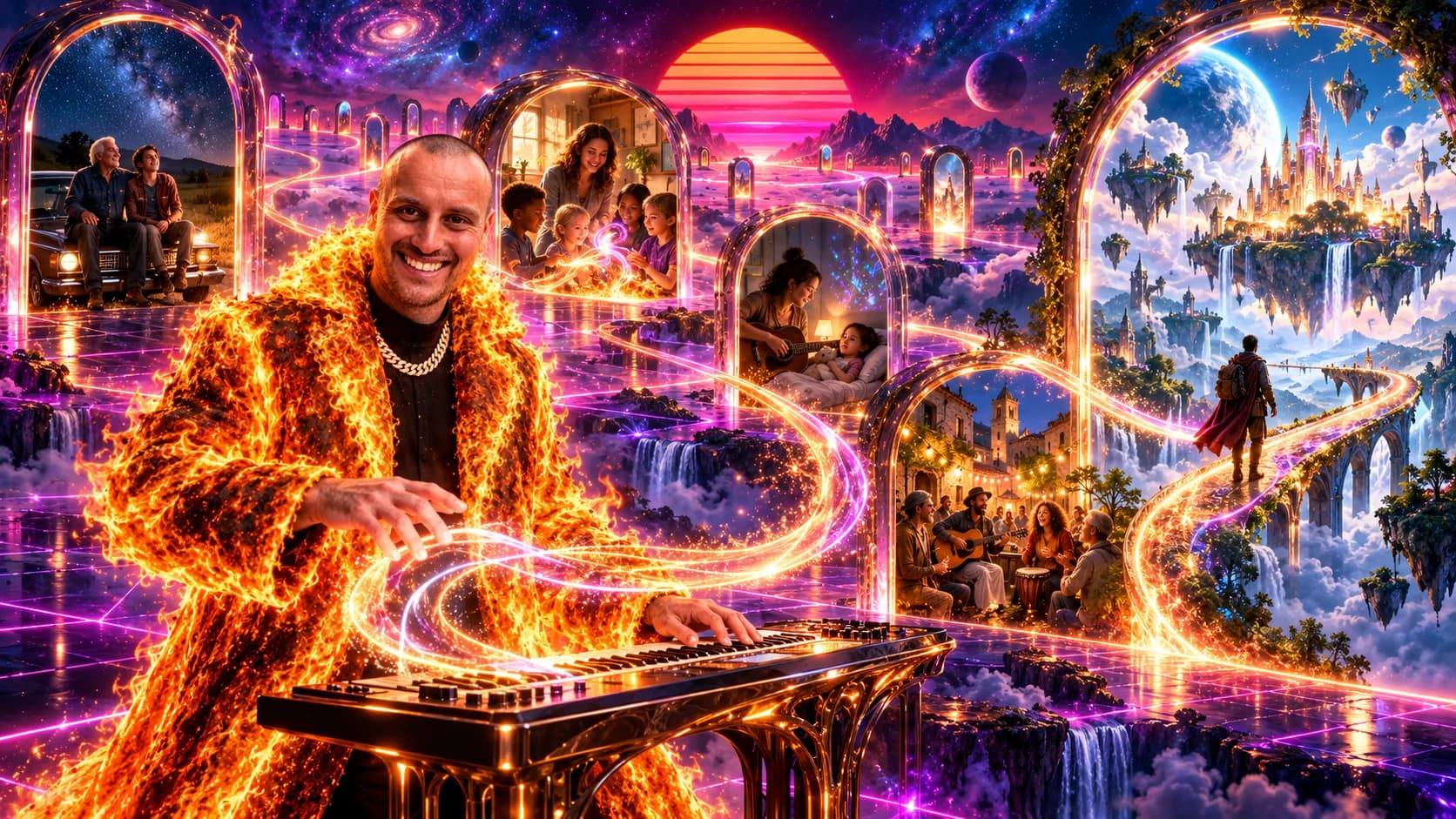
Scroll through enough AI-generated music and it is easy to feel that you have arrived late.
Another song. Another creator. Another demonstration of what the tools can do.
If so much already exists, what could possibly remain unexplored?
That feeling confuses two things: how much music people can produce and how much they have discovered to do with it.
A field can become crowded with experiments long before its most meaningful practices have taken shape.
Our theory is that as more people gain the ability to create original recorded music, they will discover more occasions worth creating it for. Some of those experiments may become lasting creative practices, personal traditions, and forms of expression.
The number of songs appearing today cannot tell us how far that process might go.
The Cost of Trying Shapes What Gets Tried
Imagine someone who wants to make a song from a story their father has told for years.
They know the details: the unreliable car, the overnight drive, the person waiting at the destination. They even have a line that might make a good chorus.
But turning that idea into a finished recording requires skills, collaborators, time, or money they may not have. The idea stays a note on their phone.
When the distance between that note and a listenable draft becomes shorter, the person can try.
They might discover that the first version is too sentimental. The second might miss the humor. By the fourth, they might recognize something of the story they wanted to preserve.
The change begins with the opportunity to experiment.
A project that once required a substantial commitment can become something a person explores, revises, and decides whether to pursue.
Many attempts will go nowhere. Others may reveal a reason to keep creating that the person could not have understood before hearing the first draft.
Lower barriers can change which ideas get a chance to become music.
Music Already Belongs to Everyday Life
People have always sung to children, celebrated together, taught through rhythm, and preserved stories in songs.
AI did not invent personal music. Neither did the recording industry.
The possibility we are exploring grows from those familiar human impulses.
What happens when more people can turn a particular story, lesson, celebration, or imagined scene into an original recording — then revise it and build on it?
A teacher could develop songs around the concepts their own students find difficult. A family could create a musical record of its stories. A community could make an anthem specific enough that its members recognize themselves in the details.
These possibilities do not require everyone to become a professional musician. They require enough people to find the process or the result worth returning to.
A song heard by twenty people could become part of an annual gathering. A song heard by one child could become part of bedtime.
The audience may be small. The place the music occupies in those lives may be substantial.
A Song Can Become the Beginning of a World
The possibilities also extend to how creative works develop.
Someone makes a song about a fictional traveler. While writing it, they discover the place the traveler left behind. That place suggests another song. A character mentioned in the second verse becomes the center of the next release.
Gradually, the songs begin to affect one another.
A melody associated with home returns during a scene of exile. A confident chorus comes back after a failure, and the same words carry a different emotional weight.
Concept albums, musical theater, and recurring musical themes already demonstrate the power of these relationships. AI tools could make this kind of sustained experimentation accessible to more independent creators.
At AI Anthems, this is part of what we want to explore: songs, characters, visual environments, and stories that deepen through their connections.
The interesting question is what those connections give the audience.
Does the next song reveal something worth discovering? Does returning to an earlier piece become more rewarding? Does the world develop enough character that someone wants to spend time there?
Producing more material is relatively easy to describe. Creating a reason to return is the artistic challenge.
Abundance Raises the Importance of Judgment
A song about a particular person can still feel generic.
Including someone’s name does not mean you have captured their character. Mentioning a hometown does not mean you have expressed what it felt like to grow up there.
Meaning depends on choices.
Which detail carries the story? Where should the lyric leave room for the music? Does the chorus bring the emotional idea into focus? Is the most impressive image also the right image?
As generation becomes easier, creators may have more opportunities to make those choices deliberately. They can compare approaches, reject attractive results that miss the point, and revise beyond the first convincing version.
That work takes attention.
A tool can make experimentation more accessible while leaving the development of taste demanding and deeply personal.
For AI Anthems, this is one reason the future feels creatively expansive. There are subjects to understand, approaches to test, and skills to develop through sustained practice.
Access opens the door. What we learn to do with that access will shape the work.
The Test Is Whether People Return
There is a serious objection to all of this: people can generate music they do not especially want to hear.
The pleasure of making something can exceed the pleasure of listening to it. An impressive demonstration can be forgotten the following day.
If AI music mainly produces a brief burst of curiosity followed by abandoned files, then a surge in creation would tell us little about its lasting significance.
Our theory therefore needs a stronger test than output.
Do people choose to listen again after the novelty has passed? Do they make another song because the first served a purpose? Does a classroom, family, audience, or community give the music a continuing place?
A teacher reusing a song because students find it helpful would be meaningful evidence. So would a family requesting another song for its next gathering, or listeners returning to follow a story across releases.
These would be signs that an experiment had become useful, moving, or enjoyable enough to sustain.
Attention remains finite. Every song still enters a world full of other things people could do.
The opportunity depends on earning a place in that world.
What It Means to Be Early
Being early does not guarantee an audience, a career, or commercial success.
It means that consequential questions remain open.
Which subjects benefit from musical treatment? What makes a personal song worth keeping? How can an independent creator build a musical world that rewards continued attention? Which uses survive beyond the first delighted reaction?
You can contribute to answering those questions even if many people began generating songs before you.
A crowded feed is a poor measure of how much remains to be learned.
For someone beginning now, a useful approach is to choose a subject they care about, make something specific, and pay attention to the response. Revise it. Find out whether anyone wants to hear it again. Let that experience inform the next piece.
That is how a possibility starts becoming a practice.
The Scale May Be in the Occasions
When we imagine a major change in music, it is natural to picture enormous audiences and songs heard everywhere.
But part of the change could be distributed across many smaller settings: a lesson, a friendship, a local celebration, an imagined world with a devoted audience.
Each might be modest on its own. Together, they could expand the role original recorded music plays in everyday life.
That is the possibility behind our optimism.
We cannot yet know which practices will endure or how widely they will spread. We can recognize that the ability to generate songs has arrived before we have fully explored what people might choose to build with it.
At AI Anthems, we believe those questions deserve years of serious creative work.
If you are wondering whether you have missed your chance, begin with something closer than the entire future of music: a story you understand, a person you care about, a world you want to bring into existence.
Give someone a reason to listen. Then give them a reason to return.
We have barely begun to discover how many reasons there could be.